When to Step In and When to Step Back With Your ADHD Teen
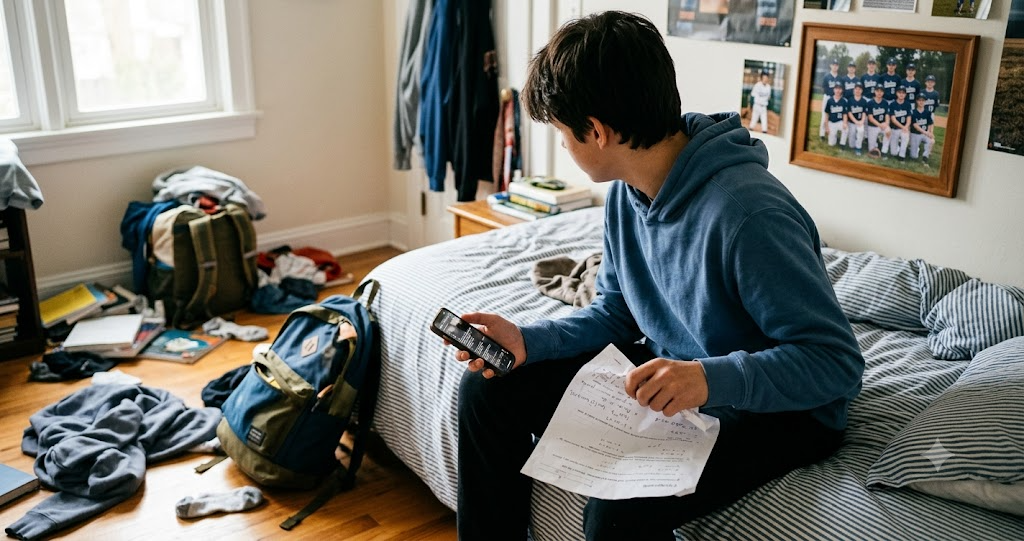
Let’s be honest: parenting a teenage boy with ADHD feels like navigating a storm with no map. One day he’s calm, focused, and actually doing his homework. The next? He’s yelling about his phone being “stolen,” leaving his backpack in the middle of the living room, and blaming you for “not listening” when you asked him to take out the trash—again.
As a parent, you’re exhausted. You’ve tried the routines, the rewards, the consequences. You’ve negotiated, reminded, and re-explained. And still—some days feel like you’re just keeping the ship afloat, not steering it.
But here’s the truth: you’re not failing. You’re doing the hard work of raising a neurodivergent teen in a world that wasn’t built for him. And you’re not alone. Teenage boys with ADHD often face real challenges—big emotions, trouble with planning and follow-through, social confusion—and many bring real strengths, too.
So how do you walk the tightrope between support and independence? When do you step in? When do you step back?
I’m a parent, and I spent 25 years in education, 23 of them in educational leadership. Let me offer you a three-part framework—drawing on advice from ADHD coach Brendan Mahan and on real-life parenting—for parents of teenage boys with ADHD. This isn’t about perfection. It’s about progress. And it starts with understanding that independence isn’t a switch. It’s a staircase. And you’re not just the guide—you’re the one who built the first step.
1. Step In When the Foundation Is Missing: Build Structure with Flexibility
ADHD isn’t laziness. It’s a neurodevelopmental difference that affects how the brain processes time, tasks, and emotions. Many teens with ADHD struggle with the skills that help us plan, organize, and follow through.
So when your son says, “I’ll do it later,” or “I forgot,” it’s not defiance. It’s a brain that’s overwhelmed. That’s why structure isn’t control. It’s scaffolding.
Here’s how to step in with purpose:
- Use visual checklists (not just verbal reminders). A simple visual chore chart—like the one in MyWins—can make abstract tasks feel concrete. Give each task a picture and let him check it off when it’s done.
- Break tasks into micro-steps. “Clean your room” is overwhelming. “Put your shoes in the closet” is doable. In MyWins, you can break a chore into steps—like “Put dirty clothes in hamper” → “Fold one shirt” → “Put one item in drawer.” Small wins add up.
- Pair structure with choice. Offer two options: “Do you want to take out the trash now or after dinner?” This gives him a real choice while keeping boundaries.
Remember: structure isn’t the enemy of independence. It’s the foundation. You’re not doing it for him. You’re doing it so he can learn how to do it for himself—eventually.
2. Step Back When the Skill Is There: Let Him Try (Even If He Fails)
Here’s where most parents get stuck: we step in too soon. We fix the homework, redo the laundry, or take over the chore because “it’s faster this way.” But here’s the hard truth: if you do it all, he never learns how to do it.
As ADHD coach Brendan Mahan writes in ADDitude, “the more you trust your child – even if ADHD has complicated that picture – the more trustworthy he will become.”
So when do you step back?
- Let him try the chore—even if it’s messy. If he’s supposed to make his bed, let him do it. If he doesn’t make it perfectly, don’t fix it. Instead, say: “I see you tried. What part felt hard?” This builds self-awareness and problem-solving.
- Use MyWins to track progress—not perfection. Let him check off each task and see what he’s done. Celebrate that. Not “I did it all right,” but “I did it. That matters.”
- Let him face natural consequences (with support). If he forgets his homework, don’t rush to email the teacher. Let him face the consequence—maybe a low grade. Then, later, say: “I saw that happened. What can we do next time?” This builds accountability without shame.
Stepping back isn’t abandonment. It’s trust. And trust is the fuel for independence.
3. Step In When Emotions Are High: Be the Calm in the Storm
Teenage boys with ADHD often experience emotions more intensely. They can go from calm to furious in seconds. This isn’t just “drama.” As Mahan points out, uncomfortable feelings like rejection, embarrassment, or fear are often disguised as anger in teen boys.
So when your son yells, “You never listen!”—don’t take it personally. He’s not attacking you. He’s overwhelmed. And if you respond with more yelling, you’ve just escalated the situation.
Here’s how to step in with empathy:
- Pause before reacting. Take three deep breaths. Say: “I hear you’re upset. Let’s take a minute.” This models regulation and gives him space to reset.
- Use “I” statements, not “you” statements. Instead of “You’re so messy!” try “I feel stressed when I see my desk covered. Can we talk about how to keep it tidy?” This reduces defensiveness.
- Offer a “reset” plan. “Let’s take a 10-minute break. Then we’ll come back and figure out what happened.” Let him take a break, then return to the task.
Mahan draws a line between punishments, which he calls “ineffective power moves designed to hurt, not teach,” and logical consequences. You don’t have to fix it all. You just have to stay present.
One Small Step You Can Take Today
Here’s your challenge: pick one chore your son avoids. Now, break it into three micro-steps using MyWins. Then, let him try it—without help. Watch him. Notice what happens. Did he get stuck? Did he give up? Did he surprise you?
Then, later, say: “I saw you try. That took courage. What part felt hard? What could we do next time?”
That one conversation—simple, kind, and grounded in reality—might be the moment he starts to believe in himself.
Final Thought: You Are Enough
Parenting a teenage boy with ADHD is not a test. It’s not a race. It’s not about getting it “right.” It’s about showing up—again and again—when you’re tired, when you’re frustrated, when you’re not sure what to do.
But here’s what I’ve learned: the same brain that struggles with focus can also hold deep empathy. The same boy who forgets his keys might remember your birthday. The same one who storms out of the room might come back with a hug. He’s not broken. He’s different. And that difference is powerful.
So keep going. Use MyWins. Celebrate the tiny wins. And when you’re overwhelmed—remember: you’re not alone. You’re part of a community of parents who are doing hard things with love.
Now go. Take one step. Then another. You’ve got this.
This article is for general information only. It is not medical advice and is not a substitute for care from your child’s doctor or care team. I’m a parent, not a doctor.