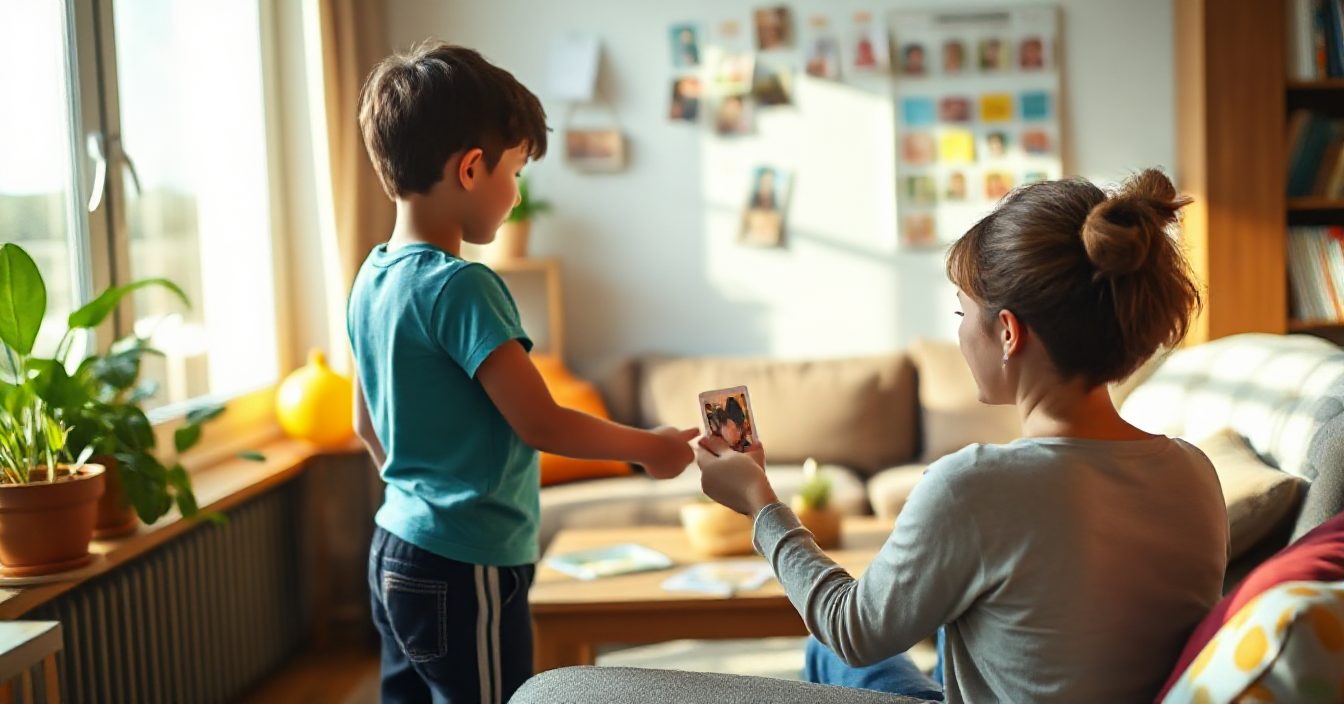
Do you want to help your child focus without reaching for another prescription? You may have more options at home than you think.
Every med trial came with a 6-to-8 week window before we would know if it was working. Waiting that long, while the school kept calling, is brutal. So I started reading about what else actually helps, and I built small habits into our days.
Here is the honest part first. In a 2023 review by Sibley and colleagues, no non-pharmacological treatment showed a consistent strong effect on core ADHD symptoms. That sounds discouraging. But the same review found that multicomponent behaviour therapy stood alongside medication as a primary treatment when you look at broader outcomes, like daily impairment, behaviour, and caregiver stress. Those broader wins are what make a home calmer.
Build a Steadier Day
Structure does a lot of quiet work. Parent training and behaviour approaches keep showing up as promising, including in a 2024 overview by Dentz and colleagues, which also points to pairing home strategies with school accommodations.
- Give one step at a time. Write a single direction on a sticky note where your child can see it. One step feels doable. A list of six does not.
- Make a picture schedule. Lay out the day in order, from breakfast to bedtime. When the brain can see what comes next, there is less bracing for the unknown.
- Praise the exact thing. Say what you saw, like "You put your shoes on by yourself." Specific beats general every time.
- Lower the noise. Turn off the TV, move the phone, pick one quiet corner for the hard task. A calmer room is easier to focus in.
- Keep the same order. Mornings and evenings go smoother when they repeat. Your child stops guessing and starts flowing.
Move the Body
This is the part that surprised me most. A 2023 network meta-analysis by Zhu and colleagues found that physical exercise can significantly help alleviate ADHD symptoms and improve executive functions in children and adolescents. That is a strategy you can start today, in your own living room.
- Add a short movement break. After a focused task, do two minutes of jumping, stretching, or a silly dance. A quick burst helps reset attention.
- Lean on aerobic activity. In the Zhu review, closed-skill activities led by aerobic exercise looked especially helpful for hyperactivity, impulsivity, and inattention. Think running, swimming, biking.
- Make it a habit, not an event. A little most days beats a big push once a week. Pick something your child actually likes so they keep coming back.
- Move before the hard thing. A few minutes of activity before homework can take the edge off restlessness. Try it and watch what happens.
Practice Pausing
Mindfulness is not a miracle, and I won't pretend it is. In the Sibley review, mindfulness showed modest efficacy on non-symptom outcomes. Modest still counts on a loud afternoon.
- Breathe with a pinwheel. Have your child breathe in slowly, then blow to spin a pinwheel or move a feather. The visual makes the breath real for little kids.
- Name the next step. Before reacting, ask, "What's the best next move?" Rehearsing the pause at home makes it easier to find in the moment.
- Try short mindfulness together. Dentz and colleagues list mindfulness and yoga among the promising approaches. Starting as a pair takes the pressure off your child.
- Build a calm-down corner. Set aside a small spot with soft light, a beanbag, and something to fidget with. When feelings run high, it becomes a place to land.
Play the Long Game
Some days nothing feels like it is working. That is normal, and it is not a failure on your part. These are supports, not switches you flip once.
- Use a visible timer. Set ten minutes and work until it rings. A clear endpoint is kinder than an open-ended "just finish it."
- Play memory games. Flip matching cards and try to remember where they are. It stretches memory and patience, and it is genuinely fun together.
- Track small wins. A simple chart with check marks shows progress your child can see. It also starts easy talks about what is helping.
- Pair home with school. Dentz and colleagues favour multimodal approaches that include school accommodations. Loop in the teacher so you are rowing the same direction.
One more thing from the Sibley review that gave me peace of mind: the non-pharmacological approaches they looked at were safe. Safe means you can try a few, keep what fits your family, and drop what doesn't, without worrying you're doing harm. None of this replaces your child's care team, so talk with your provider about anything new, especially if medication is part of the picture.
You know your kid better than any chart does. Which one of these feels doable for your family this week? Tell me in the comments, I read every one.
This article is for general information only. It is not medical advice and is not a substitute for care from your child's doctor or care team. I'm a parent, not a doctor.
Sources
- Sibley MH, Bruton AM, Zhao X, Johnstone JM, Mitchell J, Hatsu I, et al. (2023). Non-pharmacological interventions for attention-deficit hyperactivity disorder in children and adolescents. The Lancet Child & Adolescent Health. PMID 36907194
- Dentz A, Soelch CM, Fahim C, Torsello A, Parent V, Ponsioen A, et al. (2024). Non-pharmacological treatment of Attention Deficit Disorder with or without Hyperactivity (ADHD). L'Encephale. PMID 38326137
- Zhu F, Zhu X, Bi X, Kuang D, Liu B, Zhou J, et al. (2023). Comparative effectiveness of various physical exercise interventions on executive functions and related symptoms in children and adolescents with attention deficit hyperactivity disorder: A systematic review and network meta-analysis. Frontiers in Public Health. PMID 37033046