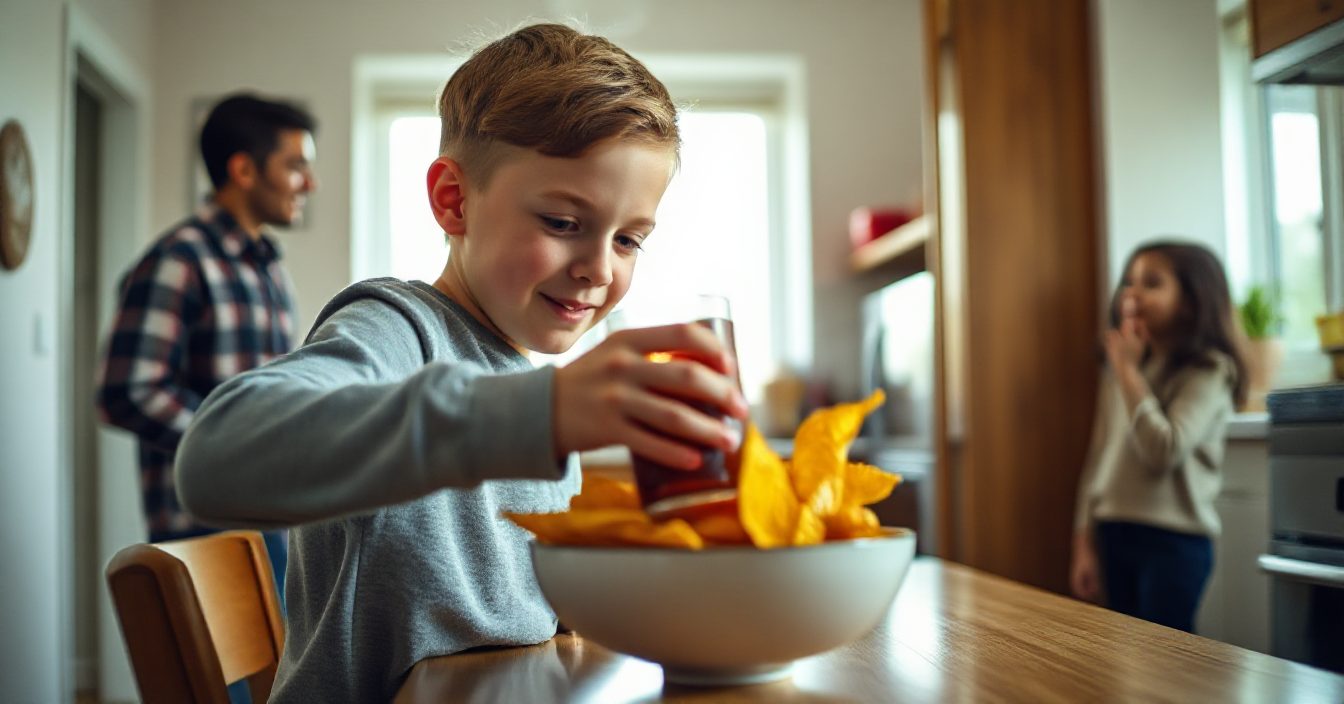
Do you wonder if the snacks on the kitchen counter are affecting your child’s mood? Are you feeling stuck trying to balance nutrition and neurodivergent needs? The answer might be simpler than you think.
My daughter is a perfectionist about her art, so her self-critic attacks the things she loves most. I was diagnosed with ADHD at 44. It was an enormous relief, and it changed how I read my own reactions. I also worked in the same district our daughter attended, which made advocating for her harder, not easier. There were things I wanted to say for her that I did not say.
Whether processed foods affect mood is still an open question, and the research so far doesn’t draw a straight line.
Know What You’re Feeding
- Read the label. Look for terms like “high-fructose corn syrup,” “hydrogenated oil,” or “artificial flavor.” These are flags that the product is ultra-processed. A quick glance each time you shop can keep hidden additives out of the pantry.
- Track intake for a week. Write down everything your child eats, even the tiny bites. Seeing the pattern helps you plan changes.
- Identify mood spikes. Pair the food log with a mood chart. When you notice a sudden drop in calm, check what was eaten in the past two hours. This isn’t a diagnostic tool, but it can point you toward foods that might aggravate symptoms.
Swap for Simpler Options
- Offer whole-food snacks. Cut carrots, apple slices, or plain popcorn into bite-size portions. Whole foods have fewer additives and more fiber. Kids often enjoy the crunch.
- Batch-prepare easy bites. Cook a big pot of quinoa or brown rice on Sunday. Portion it into snack bags, adding a drizzle of olive oil and a sprinkle of herbs. Having a ready-made, minimally processed option reduces the temptation to grab a bag of chips.
- Use flavor boosters. If your child misses the salty crunch of processed snacks, try roasted chickpeas. Season them with a pinch of sea salt or nutritional yeast. The texture satisfies, and the ingredients stay on the less-processed side.
Build Mood Support Around Food
- Create a calm eating routine. Set a regular time and place for meals, free from screens. A predictable, screen-free table can mean less sensory overload at mealtimes, and over time eating can start to feel calmer.
- Pair meals with movement. A short walk or a few minutes of stretching after eating gives your child a chance to release any built-up tension.
- Talk about feelings before and after. Use a simple question like, “How are you feeling right now?” before meals. After eating, ask, “Did anything feel different?” The tip echoes ADDitude’s “When Emotions Hijack Learning,” which encourages kids to describe their emotional state and their own ways back to calm.
Researchers in Riyadh, Saudi Arabia, surveyed 128 children and adolescents with ADHD. They found ultra-processed foods made up almost half (about 49%) of total calories (Alwaili et al., 2026, Nutrients). Even so, they found no link between how much ultra-processed food kids ate and their quality-of-life scores. The study looked at one point in time, so it can’t show cause in either direction, and it measured quality of life, not mood.
That nuance matters. The study reminds us that many factors are at play: in that group, kids whose parents had more education had better quality-of-life scores.
So, rather than aiming for a perfect “no-processed-food” diet, focus on the three pillars above. First, know what’s in the food. Second, replace the most problematic items with simple alternatives. Third, build routines that support mood regardless of the plate. If you’re unsure whether a particular food affects medication, talk to your healthcare provider. Also ask about any health conditions that might be influenced.
Have you tried any of these strategies with your child? What small change made the biggest difference in their mood? Pick one tip this week, try it, and let us know how it works.
This article is for general information only. It is not medical advice and is not a substitute for care from your child’s doctor or care team. I’m a parent, not a doctor.
Sources
- Alwaili LM et al. — “High Ultra-Processed Food Consumption but No Association with Quality of Life in Saudi Children and Adolescents with ADHD,” Nutrients (2026), PMID 42796957
- VanderMeulen G. — “When Emotions Hijack Learning,” ADDitude Magazine (Fall 2026)