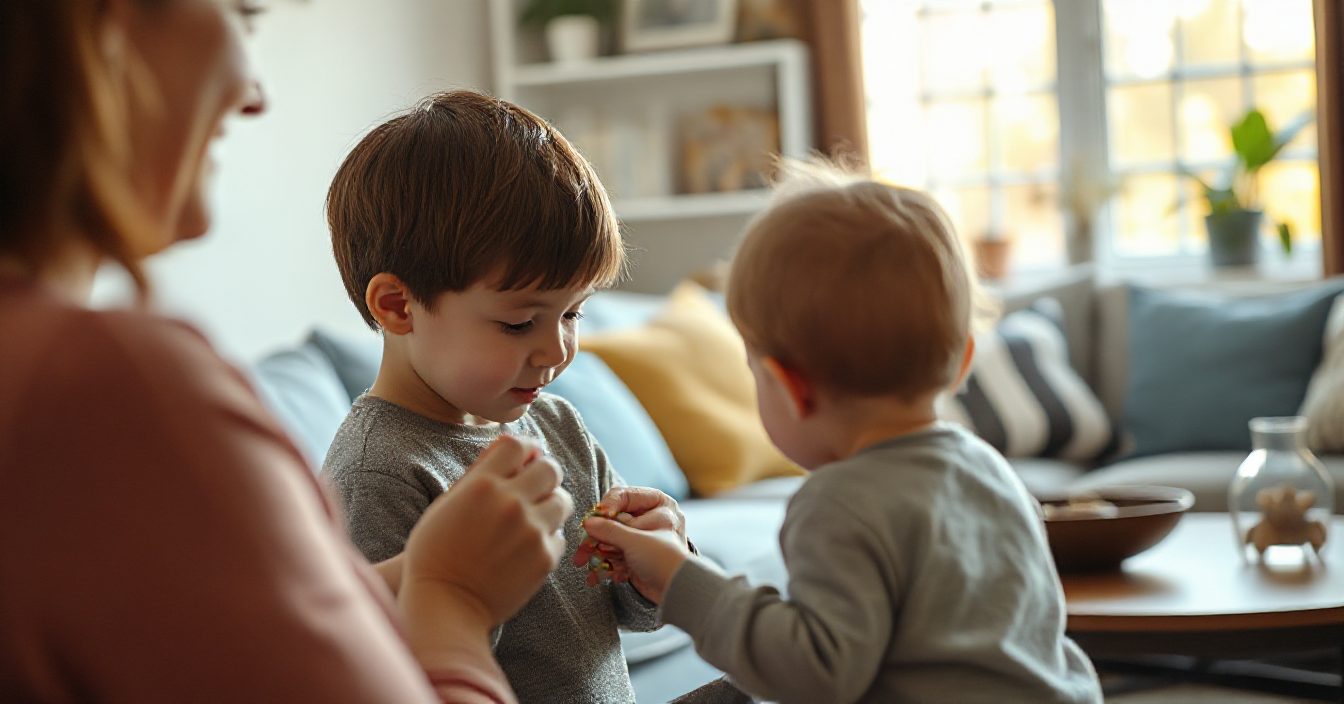
Does your child ask "what?" a lot? Do your words seem to land some days and slide right off on others? You are not imagining it, and you are not failing at this.
When a child with ADHD struggles to listen and talk, it is rarely plain defiance. The listening part and the talking part grow together. If one is shaky, the other tends to wobble too.
So I read the research the way any parent does — looking for something I can use on a Tuesday morning. A 2018 study by Rashid and colleagues looked at children being assessed for listening difficulties. Many of them had concerns about listening in a noisy background. That one finding reframed a lot for me. Noise is not background to our kids. It competes.
Make the room quieter first
Before you change what you say, change where you say it.
- Turn the noise down. Mute the TV, lower the music, close the hallway door. A quieter room gives the brain fewer sounds to sort through before it reaches your words.
- Pick one talking spot. Choose a calm corner and use it for the conversations that matter. Over time your child links that place with focus.
- Notice the good windows. Jot down when your child seems most settled — maybe after a snack, maybe when the house is calm. Save the important instructions for those windows.
Keep your words short
Long sentences are easy for us and heavy for them.
- Say the one thing. Try "Grab your backpack" instead of a three-part explanation. Extra detail can crowd out the part that actually needs doing.
- Echo and add a word. When your child offers a fragment, repeat it and stretch it gently: "The park — you want to go to the park?" You are showing you heard them and modeling how to finish a thought.
- Pair words with a picture. A "Shoes" note by the door bridges the sound to the meaning. It does not need to be a formal chart. A sticky note is plenty.
Use the same cue every time
Standing firm, but with love, works best for her.
- Pick one signal. Choose a phrase or a small hand gesture that means "listening starts now." Sameness lets the brain switch modes without a fight.
- Name the moment they listen. Catch the small wins. "You stopped and looked at me — thank you" tells them exactly what worked, better than a vague "good job."
- Breathe before you try again. When it starts to spiral, pause and reset your own tone. A calm voice keeps the door open; a sharp one tends to shut it.
Let reading be ordinary time together
Here is the part I love, because it asks for connection, not a program. A 2023 study by Dong and colleagues had kindergarteners with ADHD read together at home. Reading with a parent and reading with an older sibling both improved the children's language skills and their interest in reading.
That matters on a busy night. You do not have to be the only reader in the house. An older brother or sister curled up with a book counts. The point is the back-and-forth — the questions, the pointing, the "what happens next?"
- Read it again. Repetition is not boring to them; it is comfortable. Familiar words give their mouths something to reach for.
- Ask small questions. "Who is that?" "Where did it go?" One question a page keeps it a conversation, not a quiz.
- Hand the book to a sibling. If an older child is willing, let them read a few pages. In that study, reading with a sibling helped too, and it takes the pressure off you.
None of this is a fix you apply once. It is a rhythm you settle into. Some days the quiet room and the short sentences and the shared book all line up, and your child answers on the first try. Other days you will repeat yourself five times, and that is okay too.
And please hear this: these are tools, not medical advice. If you suspect a deeper language or hearing issue underneath the listening struggles, bring it to your doctor or a speech-language pathologist. You know your child, and a professional can help you look closer.
What has actually helped listening and talking go smoother in your house — a quiet corner, a shared book, one steady cue? Tell me in the comments. I read every one.
Sources
- Rashid M, Mukherjee D, Ahmmed A (2018). Auditory processing and neuropsychological profiles of children with functional hearing loss. International Journal of Pediatric Otorhinolaryngology. PMID 30262367
- Dong Y, Chow BWY, Mo J, Zheng B (2023). Dialogic reading with attention-deficit-hyperactivity disorder (ADHD) kindergarteners: Does reading with parents or siblings enhance their language development? Developmental Psychology. PMID 36201815